
by Laura Ruiz (Soil Ambassador), Spain
(Translated from Spanish)
At the moment I have not started with the compost projects to be able to go to my town to do the trial, which I hoped I could. This year there have been more tasks to do here, in Madrid, on a day-to-day basis than I would have liked! But that doesn´t mean I am ceasing to be the best Soil Ambassador that I can be in every moment ...

As you know, on the 11th (of December) they signed the Green Deal or Green Pact in Brussels. Well, in the afternoon I attended a Citizen Dialogue which I had been invited to participate in for a couple of weeks. The afternoon of the eleventh we spent creating proposals among almost two hundred young people, which were presented to the Executive Vice President of the Green Pact Frans Timmermans.
Twenty-three proposals were created, and I promoted one on land management. There was a lot of interest and we made a great team. The proposals were both agricultural and urban. In the voting, we came fourth , but that's doesn´t mean we stopped trying! The man who won with the R + D+ I proposal is an acquaintance of mine, so, as he said that his proposal would include all the others, I encouraged him to include something about soil and air in his speech to Frans. He gave me about thirty seconds so when you see the Dialogue, you will see what I said. On the other hand, I won a proposal for Environmental Education and another for local food, and European eco-labeling that would reflect this (locality). Super interesting!

For my part and with the encouragement of the ground team, I participated in the open questions and asked Timmermans how much importance was given to the subject of soil in Europe ... how much do they know about the state of soils , etc. More than anything to give more emphasis to the importance soils pla. hahaha! It was fun because I went blank for a moment. Apparently, quality foods and pesticide reduction are promoted in the Green Pact.

I would like people to know about this. They are supposed to include the proposals discussed in the dialogue, or at least, they will be promoted. Here is the link to the debate (it lasts an hour, the r & d + i guy comes out in the first half and I appear near the end)
At the moment, with this experience under my belt, I have to continue studying, the exams are super close
https://mobile.twitter.com/eu_commission/status/1205064723315773441
And here is my little post on LinkedIn: https://www.linkedin.com/posts/activity-6610892885858492418-CafM

(Translated from Spanish)
At the moment I have not started with the compost projects to be able to go to my town to do the trial, which I hoped I could. This year there have been more tasks to do here, in Madrid, on a day-to-day basis than I would have liked! But that doesn´t mean I am ceasing to be the best Soil Ambassador that I can be in every moment ...

As you know, on the 11th (of December) they signed the Green Deal or Green Pact in Brussels. Well, in the afternoon I attended a Citizen Dialogue which I had been invited to participate in for a couple of weeks. The afternoon of the eleventh we spent creating proposals among almost two hundred young people, which were presented to the Executive Vice President of the Green Pact Frans Timmermans.
Twenty-three proposals were created, and I promoted one on land management. There was a lot of interest and we made a great team. The proposals were both agricultural and urban. In the voting, we came fourth , but that's doesn´t mean we stopped trying! The man who won with the R + D+ I proposal is an acquaintance of mine, so, as he said that his proposal would include all the others, I encouraged him to include something about soil and air in his speech to Frans. He gave me about thirty seconds so when you see the Dialogue, you will see what I said. On the other hand, I won a proposal for Environmental Education and another for local food, and European eco-labeling that would reflect this (locality). Super interesting!
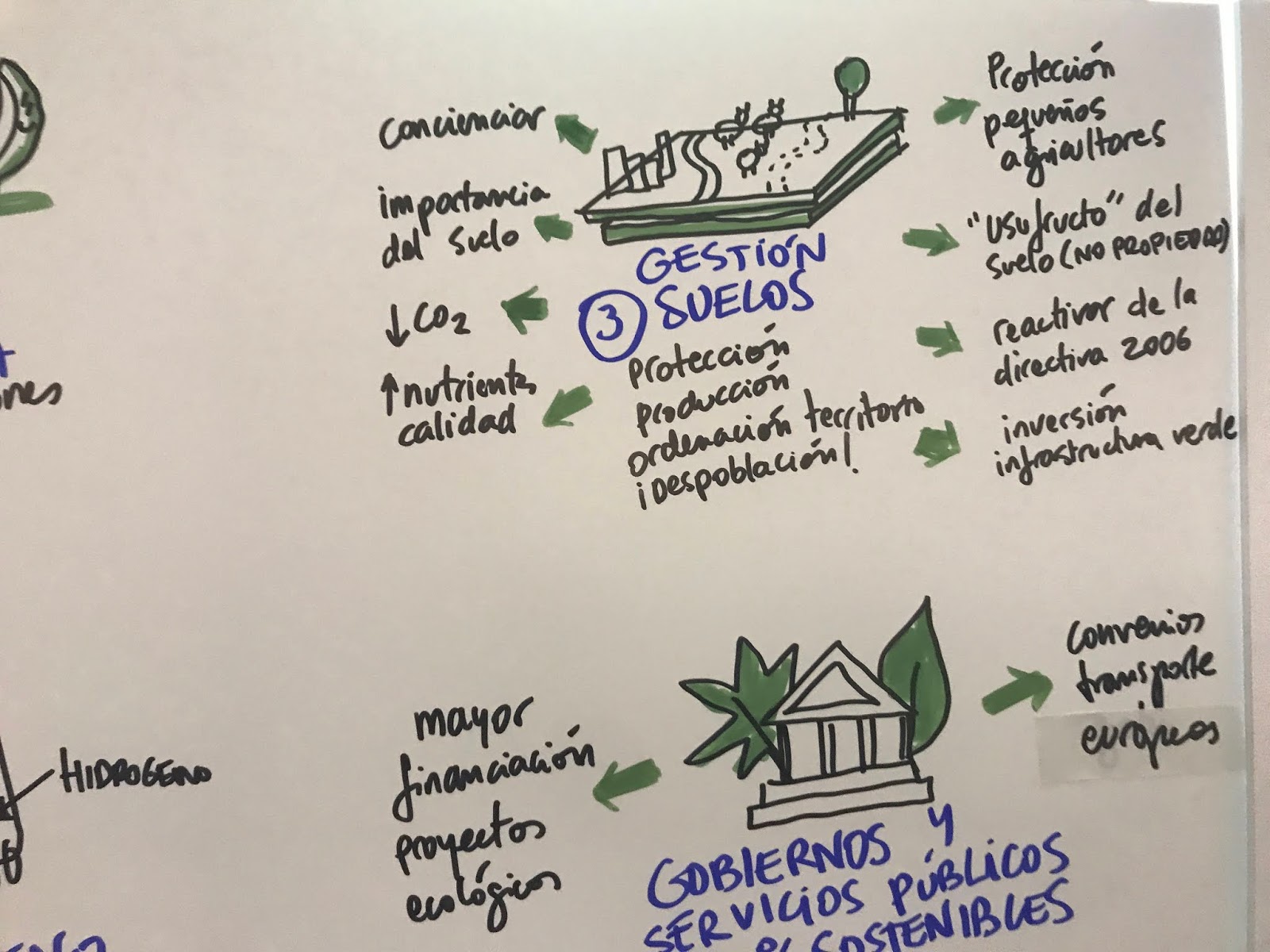
For my part and with the encouragement of the ground team, I participated in the open questions and asked Timmermans how much importance was given to the subject of soil in Europe ... how much do they know about the state of soils , etc. More than anything to give more emphasis to the importance soils pla. hahaha! It was fun because I went blank for a moment. Apparently, quality foods and pesticide reduction are promoted in the Green Pact.

I would like people to know about this. They are supposed to include the proposals discussed in the dialogue, or at least, they will be promoted. Here is the link to the debate (it lasts an hour, the r & d + i guy comes out in the first half and I appear near the end)
At the moment, with this experience under my belt, I have to continue studying, the exams are super close
https://mobile.twitter.com/eu_commission/status/1205064723315773441
And here is my little post on LinkedIn: https://www.linkedin.com/posts/activity-6610892885858492418-CafM

Comments
Post a Comment